



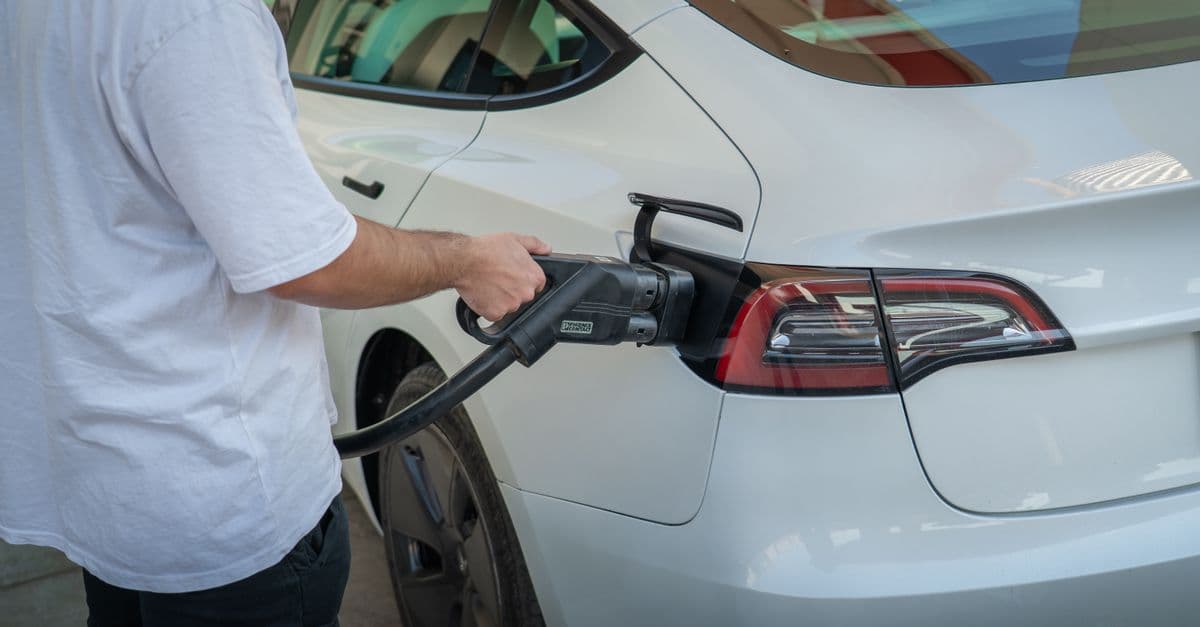
The rise of electric vehicles (EVs) has heralded a transformative era in the automotive industry, promising cleaner and greener transportation for the future. As more individuals and businesses embrace the sustainability of EVs, the concern of range anxiety remains a significant barrier to widespread adoption. Range anxiety refers to the fear of depleting the battery while driving and being stranded without access to charging infrastructure. To alleviate this concern and foster the accelerated adoption of electric vehicles, a comprehensive approach to EV charging options and advancements in EV charging app development is essential.
1. The Growing Popularity of Electric Vehicles
The global sales of electric vehicles have experienced a remarkable surge, reaching 3.1 million units in 2021, representing approximately 4.6% of all passenger car sales worldwide. This growth trajectory indicates a promising shift towards sustainable transportation solutions. (Source: International Energy Agency - IEA)
2. Understanding EV Charging Options
Addressing range anxiety starts with understanding the diverse EV charging options available:
a) Level 1 Charging (Home Charging): Level 1 chargers are the most basic and widely accessible charging option. Utilizing a standard household outlet (120V), they provide a slow charging rate, adding approximately 4-5 miles of range per hour. While ideal for overnight charging at home, Level 1 charging may not be sufficient for those with higher daily mileage needs.
b) Level 2 Charging (Public Charging): Level 2 chargers offer a faster charging rate by utilizing a 240V outlet. These chargers are commonly found in public charging stations, workplaces, and commercial areas. With a charging speed of around 25-30 miles of range per hour, Level 2 charging significantly reduces charging time compared to Level 1.
c) Level 3 Charging (DC Fast Charging): For rapid charging on the go, Level 3 chargers, also known as DC fast chargers or superchargers, provide an impressive charging speed of up to 300 miles of range per hour. These chargers are usually strategically located along major highways, enabling EV owners to recharge to 80% battery capacity in under 30 minutes.
3. Advancements in EV Charging App Development
To further ease range anxiety and enhance the overall EV ownership experience, EV charging apps have emerged as a critical tool for EV owners.
a) Statistics on EV Charging App Usage:
According to a survey conducted in 2022, approximately 65% of EV owners regularly use EV charging apps to find nearby charging stations and plan their journeys effectively.
b) Key Features of EV Charging Apps:
i) Real-time Charging Station Availability: One of the most valued features in EV charging apps is real-time information on charging station availability. With 86% of EV owners considering this feature crucial, users can plan their charging stops with confidence.
ii) Integrated Payment Solutions: To simplify the charging process, 91% of EV users prefer apps that offer integrated payment options. This feature streamlines payment procedures and eliminates the need for multiple payment accounts.
iii) Charging Speed and Plug Compatibility: With 78% of EV owners seeking information on charging speed and plug compatibility at various stations, EV charging apps provide valuable data to optimize charging efficiency during trips.
Want to explore about the leading EV CPMS software? **Explore Vidhyutam
4. Collaboration between EV Vehicle Manufacturers and Charger Manufacturers
Collaboration between EV vehicle manufacturers and charger manufacturers holds the key to overcoming range anxiety comprehensively. By working together, these stakeholders can ensure seamless compatibility between EV models and charging infrastructure, optimizing charging technologies for improved performance and user experience.
5. Expanding Charging Infrastructure
The expansion of charging infrastructure is a critical aspect of reducing range anxiety. Governments, private organizations, and charging networks must collaborate to invest in and develop a robust charging network that covers highways, cities, and rural areas. The presence of ample charging stations offers peace of mind to EV owners, encouraging them to explore new territories with confidence.
6. Educating and Raising Awareness
Education and awareness campaigns can play a pivotal role in reducing range anxiety. EV manufacturers and charging networks should prioritize educating prospective EV owners about charging options, expected range, and the growing charging infrastructure. Dispelling misconceptions and providing accurate information will boost consumer confidence in making the transition to electric mobility.
Conclusion:
Range anxiety need not hinder the widespread adoption of electric vehicles. By understanding the diverse EV charging options, embracing advancements in EV charging app development, fostering collaboration between EV vehicle and charger manufacturers, expanding the charging infrastructure, and raising awareness through education, we can empower EV owners to embrace sustainable transportation with confidence. Together, let us drive towards a cleaner, greener future, powered by electric mobility.