

Walk into a jewellery or diamond business and watch how it actually runs, and it becomes obvious very quickly why so many of them are quietly unhappy with their ERP. The software was usually chosen the ordinary way, on features and reputation, and on paper it does inventory, accounting, and sales like any other. But a jewellery operation does not behave like a warehouse of identical boxes, and a general-purpose ERP is built, deep in its assumptions, for exactly that warehouse. The mismatch is not in any single feature. It is in the model of reality the ERP takes for granted, and jewellery breaks almost all of it.
This is why the story is so consistent across the industry: an ERP goes in, the launch is declared a success, and then the spreadsheets quietly reappear. Not because the team is undisciplined, but because the business has realities the system was never designed to hold, and someone has to hold them somewhere. Understanding exactly which realities these are is the whole difference between an ERP that fits a jewellery business and one it spends years fighting.
A generic ERP assumes a world jewellery does not live in
Underneath almost every general-purpose ERP are a few quiet assumptions. Items are fungible, so one unit of a product is interchangeable with another and a single stock-keeping unit describes it. Stock is counted one way, in pieces or in a single unit of measure. Cost is reasonably stable, so a product's value does not swing day to day. And the flow is clean: you buy it, you hold it, you sell it, you deliver it. For most industries these assumptions are close enough to true to be useful. For jewellery and diamonds, every one of them is wrong in a way that matters, and an ERP resting on wrong assumptions does not bend gracefully. It resists.
The realities that break it
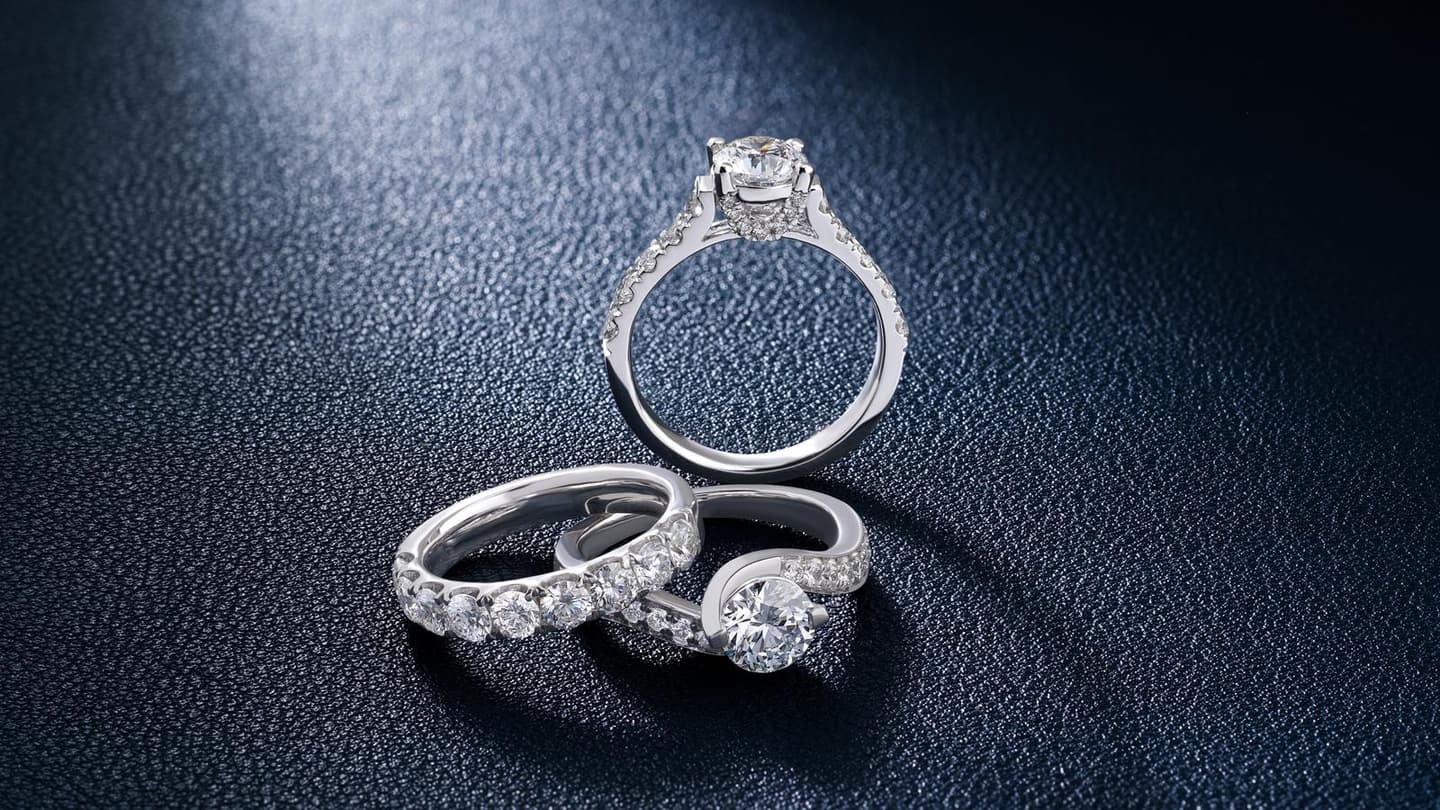
The first reality is uniqueness. A loose diamond or a finished piece is frequently not interchangeable with the next one; it has its own weight, its own quality, often its own certificate and its own four Cs. Treating it as a generic SKU throws away exactly the information the business runs on, including true cost and true margin per item. The second is dual units. Jewellery inventory lives in weight and in pieces at the same time, and both have to stay accurate together, which a system built around a single unit of measure handles badly. The third is memo and approval goods: enormous value routinely sits with a customer or another dealer on approval, not sold and not simply in stock, and a system that insists every item is either owned-and-held or sold has nowhere honest to put it. The fourth is moving prices: gold and stone rates change constantly, and costing and pricing have to follow them and then layer on making charges, wastage, and purity, rather than assuming a fixed cost. And around all of this sit old-gold exchange, repairs, and custom orders, which a generic ERP treats as awkward exceptions and a jewellery business treats as Tuesday.
What actually happens on a rigid ERP
Forced onto a system that assumes none of this, a jewellery business does not stop needing any of it. The needs just leak out around the software. Unique stones get flattened into generic SKUs, so traceability and real per-item margin disappear. Weight and piece counts drift apart because the ERP only truly tracks one of them. Memo goods get recorded in a side spreadsheet because the system has no honest home for them, so nobody can see total exposure at a glance. Costing lags the market because the software assumes stable costs. And every one of these gaps gets filled by a person with a spreadsheet and a manual routine, until the informal layer is doing the real work and the ERP is an expensive, slightly fictional record of the business. None of this appears in the vendor demo, because the demo runs the clean, fungible, sell-on-delivery path the ERP was built for. It appears months later, as stock you cannot trust, margins you cannot see, and a team that quietly relies on its own files instead of the system.
Fit beats features here more than anywhere
The lesson is the one that applies to every ERP decision, only sharper: what matters is fit, not the length of the feature list or the size of the brand. A jewellery business is not served by the ERP that ticks the most boxes in a generic comparison. It is served by the one whose underlying model can actually represent unique items, dual units, memo goods, and rate-driven costing without a fight. This is where a flexible, framework-based platform earns its place. Something like ERPNext, built on Frappe, is valuable here not because it arrives knowing jewellery, but because its data model and workflows can be shaped to the industry instead of forcing the industry to contort itself to the software. Unique-item tracking, dual units, approval workflows, and daily-rate costing can be modelled as the normal path rather than faked in the margins.
That flexibility is a foundation, not a finished answer. It still has to be implemented by people who understand both the platform and how a jewellery business really operates, because a flexible system implemented without that understanding just gives you more sophisticated ways to get the model wrong. But a flexible foundation makes the right fit reachable, which a rigid enterprise platform, however famous, often does not.
A worked example
A diamond trading business came to us running an ERP that everyone in the office had quietly given up on. On paper it managed their inventory; in practice, the real inventory lived in a set of carefully guarded spreadsheets. When we looked, the reasons were entirely structural. Their stones were unique and certified, but the ERP tracked them as plain stock items, so there was no reliable way to see the cost or margin of a specific stone. A large part of their value was always out on memo with other dealers, and the ERP had no concept of that, so the spreadsheets tracked what was really where. Prices moved with the market daily, and the system assumed fixed costs, so valuations were never quite right. The team was not resisting the software; they were routing around a model that did not match their business. We rebuilt the core on a flexible platform that could represent what they actually had: individual certified stones tracked as unique items, a proper memo and approval workflow so exposure was visible at any moment, and costing tied to current rates. The spreadsheets did not need to be banned. They simply stopped being necessary, because the system finally held the reality they had been holding by hand.
Buy the fit, especially in jewellery
Every business should choose an ERP for fit over features, but in jewellery and diamonds the cost of ignoring that advice is unusually high, because the mismatch is structural rather than cosmetic. A generic ERP does not fail a jeweller loudly; it fails quietly, by pushing the truest, most valuable parts of the operation, the unique stones, the memo exposure, the real margins, out into spreadsheets it cannot see. The way to avoid that is to start from your own reality, the uniqueness, the dual units, the memo goods, the moving prices, and choose and implement a system that can hold it natively. Get that right and the ERP becomes the single trustworthy picture of the business. Get it wrong and you have bought an expensive system that everyone politely ignores.
Choosing and implementing an ERP that actually fits how a jewellery or diamond business runs, from unique certified stock to memo goods and rate-driven costing, rather than forcing your operation onto a rigid platform, is exactly what our ERP and CRM implementation work is built around: starting from your real processes and shaping the system to them. Book a discovery call and we will help you judge fit before you commit.
Frequently asked questions
Why do generic ERPs struggle with jewellery businesses?
Because a jewellery operation breaks most of the assumptions a general-purpose ERP is built on. A standard ERP expects fungible items with a single stock-keeping unit, stable costs, and a clean sell-on-delivery flow. A jewellery business deals in items that are often unique, stock that is measured by weight and by piece at the same time, goods that go out on memo or approval before any sale happens, costs that move with the daily metal and stone rate, and prices built up from making charges, wastage, and purity. Forced onto a rigid ERP, none of that fits cleanly, so the business ends up either paying for heavy customisation or running spreadsheets alongside the system to hold everything the ERP could not.
What does a jewellery ERP need to handle that a normal one does not?
Several things a general ERP treats as edge cases are the everyday reality in jewellery. Stones and finished pieces are frequently unique and need to be tracked individually, often with a certificate number and the four Cs, rather than as interchangeable SKUs. Inventory has to be valued and moved in dual units, weight and count together. Memo, consignment, and approval goods have to be tracked while they sit with a customer or another dealer without having been sold. Costing and pricing have to follow the daily rate for gold and stones and then add making charges, wastage, and purity. And old-gold exchange, repairs, and custom orders all need to flow through the same system. A jewellery ERP has to make these the normal path, not a workaround.
Is ERPNext a good fit for jewellery and diamond businesses?
It can be a strong fit, precisely because it is flexible rather than fixed. The advantage of a platform like ERPNext, built on the Frappe framework, is that its data model and workflows can be shaped to the industry rather than the industry being forced to bend to the software. Unique-item tracking, dual units of measure, memo and approval workflows, and rate-driven costing can be modelled properly instead of faked. That flexibility is not automatic value, though; it has to be implemented well by people who understand both the platform and how a jewellery business actually runs. Fit still comes from the implementation, not from the logo, but a flexible foundation makes the right fit reachable in a way a rigid enterprise ERP often does not.
What goes wrong when a jewellery business forces its operation onto a rigid ERP?
The system technically goes live, but the real work leaks out around it. Unique stones get entered as generic SKUs, so traceability and true margin per item are lost. Weight and piece counts drift apart because the ERP only really tracks one. Memo goods are recorded on the side because the ERP wants everything to be either in stock or sold, so exposure is never clear. Costing lags the market because the system assumes stable costs. Staff invent spreadsheets and manual steps to hold what the ERP cannot, and those workarounds become the real operating system while the ERP becomes an expensive record of a version of the business that does not quite exist. The gap does not show up in the demo; it shows up months later as inaccurate stock, unclear margins, and a team that trusts its spreadsheets more than the software.